October 28, 2025
Cape Town, South Africa


Cape Town, South Africa
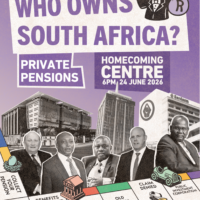
Open Secrets has launched the latest volume of its incisive new Who Owns South Africa series that exposes the powerful players who own South Africa’s economy. This volume, Who Owns South Africa: Private Telecoms, examines the ownership of the country’s biggest telecoms companies: MTN, Vodacom, Telkom and Cell C. It reveals how these players impact the rights of people around the world, their relationships with powerful politicians, and the growing role they play in selling financial services.
At the heart of our report is the argument that telecoms services should be a public right instead of a private privilege for corporate benefit. In South Africa, at least 90% of households own a working mobile phone, which has helped almost 80% of people access Internet services. Without mobile telecoms, most of these Internet users would not have access to needed communication and information services.
But, access to these services are impacted by the concentrated private ownership in the sector. Just three companies – MTN, Vodacom, and Telkom – control more than 90% of the mobile telecoms market in South Africa. Together, these companies paid nearly R20 billion in dividends to shareholders in the previous financial year.
WOSA: Private Telecoms comes at a time when MTN is facing scrutiny over its board of directors’ revolving door with the ANC, and its business operations in Iran, which have been used by US politicians to peddle their own foreign interests. Likewise, the private owners of Vodacom and Telkom have close ties to politicians and politics, allowing private profit to have sway in politics.
These political connections have other impacts. MTN and Vodacom have obeyed requests of governments and other groups to potentially violate human rights in countries across Africa and the Middle East through Internet shutdowns. We first traced these shutdowns in our #ShutdownsEverywhereYouGo report earlier this year. We continue to emphasise how these vital services have been used to further the interests of powerful elites, while suppressing human rights across the world.
Lastly, we show how telecoms companies are increasingly selling financial services to vulnerable people throughout Africa and profiting from it. While fintech has been lauded for increasing financial inclusion for poor people, our report uncovers the growing concerns of how these services may be exploitative and extractive, and how market dominance allows these companies to corner the market for financial products.
This report is a call to action for fairer models of ownership in the telecoms industry. These basic services must work in the interests of the people, instead of the shareholders who control them.
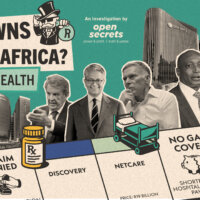
In August 2025, we released our first WOSA volume, WOSA: The System, and in September we launched our second, WOSA: Private Healthcare.